Friday, May 17, 2013

Grain Price and Market Comments 5-17-2013


Markets are called mixed to weaker this a.m. behind a mixed overnight session.


When the overnight session paused old crop corn was down ¾ of a penny a bushel, new crop corn was down ½ of a cent, old crop soybeans were up 5 ½ cents a bushel, new crop soybeans up 2 cents a bushel, KC wheat down 3, MPLS wheat was off a penny, and CBOT wheat was off a nickel.

At 8:15 outside markets are surging with the US dollar up 620 points at 84.206 on the cash index, equity futures point to a positive start of about 40 points on the DOW, crude is up a buck, and gold is down another 11 bucks.

The US dollar took out last year’s highs and is now at its highest spot since late June/Early July of 2010.  As mentioned a few times the last couple of days our grains made our lows June 29th 2010; the day before the June 2010 USDA stocks and acre update.  At that time July corn on the board got down to 3.25.  The US dollar isn’t at its highs it made it June of 2010; but it is trading at about the same level it was a week or so after the grains made their lows.  Not a good reason for the funds to get super interested coming back into commodities.  Spec money seems to prefer the commodity play as a hedge against inflation and inflation typically happens more with a weaker US dollar.  A stronger US dollar also doesn’t help our export potential; it makes us more expensive as we try to sell grain.

It does look like parts of the EU have some decent rains forecasted and that is pressuring the wheat market a little bit.  I have also seen comments about the recent moisture and expected moisture in the United States in the next few days; those comments indicate that because of the slow developing winter wheat crop the moisture could be beneficial. 

INFORMA is expected to release its acre estimate updates this a.m.  The market might be watching to see if they think we have added prevent plant acres or lost acres in general do to the moisture.  I am not sure if they will have a production number.  The thing about the slow planting and production numbers is the fact that we can afford to lose some based on our present balance sheet.  It might take losing some to get the funds interested.  Think of it this way; they look at the USDA numbers and see 14 billion bushel production and 2 billion bushel carryout; none of them say well that’s bullish I should buy.  It probably takes losing the top end of the current ideas before we have a real good chance of getting the funds too interested. 

Sounds like South America is giving some support to the bean market.  Argentine producers don’t seem to be interested selling and are reluctant sellers; the crushers down there have only been able to buy 10.7 MMT versus 12.5 MMT a year ago; despite a larger crop.  Also hearing talk of an on again off again strike in some Brazilian ports.  We did sell a few old crop soybeans to unknown today; as well as new crop soybeans to both unknown and China.

Weather should be the driving factor; but we probably won’t know until Monday if it is a rain makes grain or if moisture is taking away some of the top end yields via late planting and if it is losing acres.  Plenty of debate around on that topic.  Some guys are “mudding it in” and that also might cause some issues later.  The other thing to remember about the late planting is the fact that some of its effects won’t be known for several months. 

Below is comment on weather from the LaSalle Group  “Weather appears to be bearish for the most part.   Probably had record week of corn planting.   Farmers going 24 hours per day.   Heavy rains are starting to fall in the NW of the corn belt and will continue to move eastward into next week.   Most of the heaviest amounts should be confined to the Dakota's and Minnesota.   Temps will warm following the rains and dry out in most of the belt.   Would think corn progress is somewhere between 60 - 65% and beans 20 - 25%.”

Old crop soybeans and corn remain extremely tight; with good margins for the ethanol plants and that should help ease some of the weakness seen in new crop should things pan out the way some are thinking.  But it will only take us so far; plus the funds seem to own some old crop futures; they might not want to hold on if they think that new crop is bearish.

The other thing I have noticed a lot the past couple of weeks is the fact that many advisors are bearish and making sales for 2013 crop and some for 2014.  I don’t think producers are following them and that is one component missing from making a possible bottom.  We have many in the industry bearish, we have spec’s bearish, but we don’t have too many bearish producers.  Markets like to turn when everyone starts betting on the same thing; we don’t have that yet. 

Please give us a call if there is anything we can do for you.


Jeremey Frost
Grain Merchandiser
Midwest Cooperatives
800-658-5535

Thursday, May 16, 2013

Closing Market Comments 5-16-2013


Markets closed mixed today in choppy trade.

Old crop corn was off 9 cents, new crop corn was down 8 cents a bushel, July soybeans were up 15 cents a bushel, new crop soybeans were up 8 cents a bushel, KC wheat was down 8 cents a bushel, MPLS wheat was unchanged, CBOT wheat was down 6 cents a bushel, stock market closed down with the DOW off 42 points, the US dollar finished near unchanged after being down earlier (presently at 4:30 the cash index is at 83.74), gold off about 12 bucks, and crude was up 90 cents.

Fairly poor day for the grains; one that seen some technical damage done to some of the charts also.  First off we had KC and CBOT wheat make new lows for the month and we have December corn within a penny of last week’s lows and Dec corn also made its lowest close since April 26th.  On the positive side MPLS wheat did hold its support area and July soybeans had their highest close since March.  The bigger technical negative might be the US dollar price action; it had a pause today; but overall it has been on super strong and is flirting with last week’s highs.  A break of last year’s highs will open the door to a technical test of the 2010 highs.  Keep in mind that when the US dollar made its highs in 2010 nearby corn futures got down to about 3.25.

We did have exports out this a.m. and they were good for soybean meal.  But otherwise fairly quiet; at least they were not bullish enough to get the funds interested in buying.  Wheat numbers were very poor and have some in the industry questioning if we can hit the USDA projection.

I did see some rumors about a possible port strike in Brazil and that seemed to give some life to the old crop soybean market; the actual exports of old crop beans were very poor.

Seen another couple comments on twitter in regards to wheat.  One mentioned a much smaller Russian wheat crop estimate then what the USDA presently has; which would be positive; but the other was some talk that Russia was looking to sell some more old crop wheat.  They haven’t been in the headlines under cutting our wheat for some time; but that talk has resurfaced.

One other thing leading to some pressure in our markets is the idea that we could potentially see a record amount of corn planting this week.  I would think that would be a stretch; but I guess we will find out Monday.  The bigger question should be will it matter to the funds or what would cause the funds or market in general to want and have prices run up?

The wheat markets did bounce decently in the close; talk of fund buying.  If I was a fund manager I would be nervous playing wheat form the short side simply because of the United States crop; small crops typically get smaller; not bigger and I expect further production reductions in the months ahead.

One of our local ethanol plants dropped their corn basis bid by a dime or so today.  Sounded like he got a bunch of stuff bought today; plus they are simply nervous owning inventory going into the July-September inverse.  As I have mentioned many times they can’t sell ethanol out there.  This is good and bad; first off look for basis to be very choppy and volatile.  Secondly having nothing bought when you use 4 million bushels a month?  Good risk management?  I don’t think so; to me it feels like they got so burnt last year via having ownership when basis crashed that they are setting themselves up to get burnt the opposite direction this year?  The problem with it is simply the spreads between the nearby and deferred futures months.  I know as an elevator I can’t carry length threw the inverse.

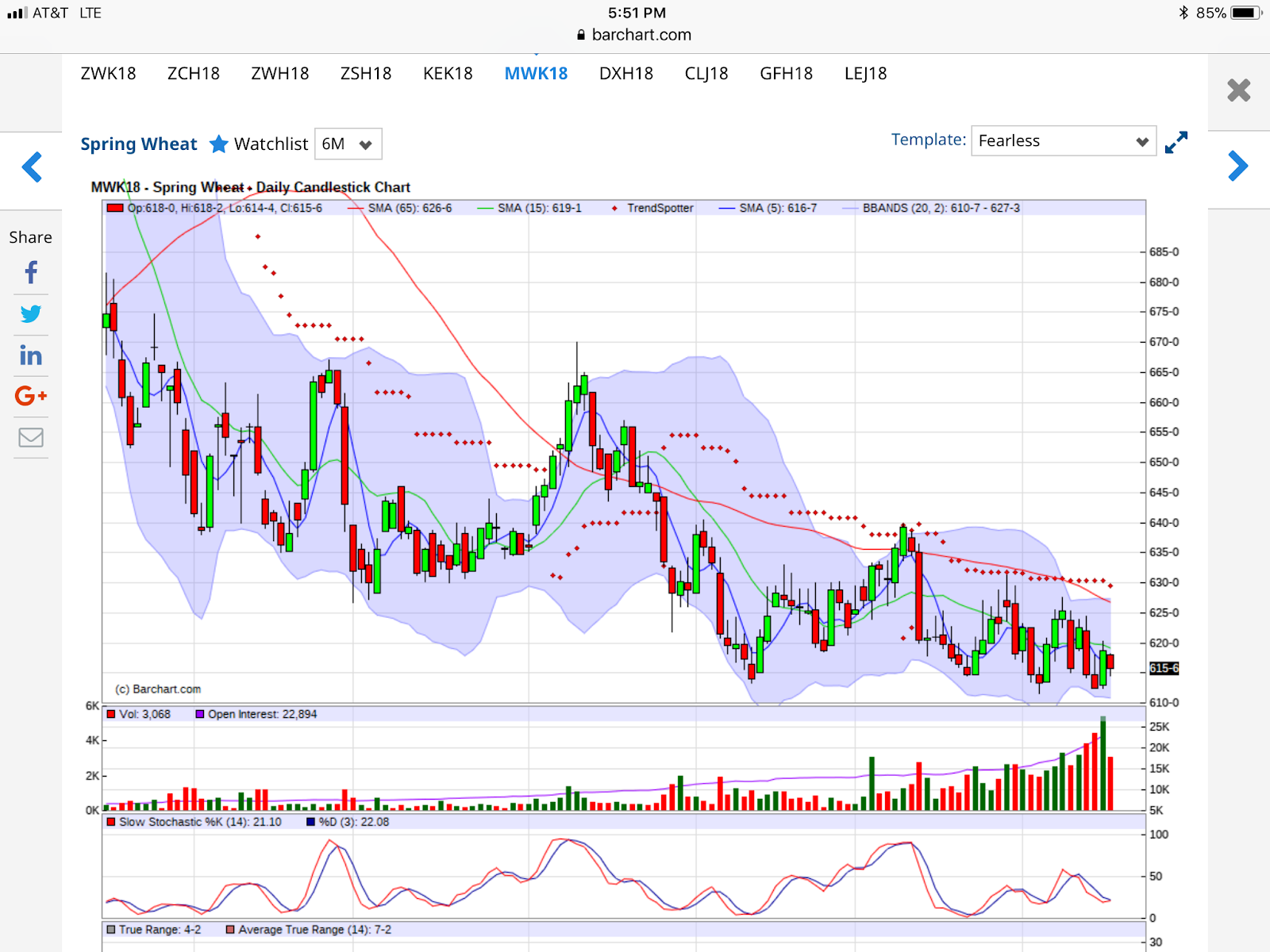
Spring wheat firmness seemed to be coming from weather as parts that are not planted might get slowed down.  Other parts such as our area and those to the North and West of us will welcome moisture.  But in talking to my contacts many indicate spring wheat is not completely planted in the heart of spring wheat country in ND.

Please give us a call if there is anything we can do for you.

USDA report recap from CHS Hedging's Chris Steinhoff

Below is from CHS Hedging's Chris Steinhoff

Good Recap on current fundamental outlook.

Export Sales - Morning Grain Market Comments


Markets are called mixed to better this a.m. behind a  mainly firmer overnight session.

Old crop corn was off a penny a bushel, new crop corn was up a penny a bushel, KC wheat was up 4 ½, MPLS wheat was up 3, CBOT wheat was up 3, new crop soybeans were up by 6 cents a bushel, and old crop soybeans were up 4 cents a bushel.  Outside markets have the US Dollar taking a breather with the cash index off 165 points at 83.671, equity futures are pointing towards a slightly lower start, crude is up 35 cents a barrel, and gold is off 17 bucks an ounce. 

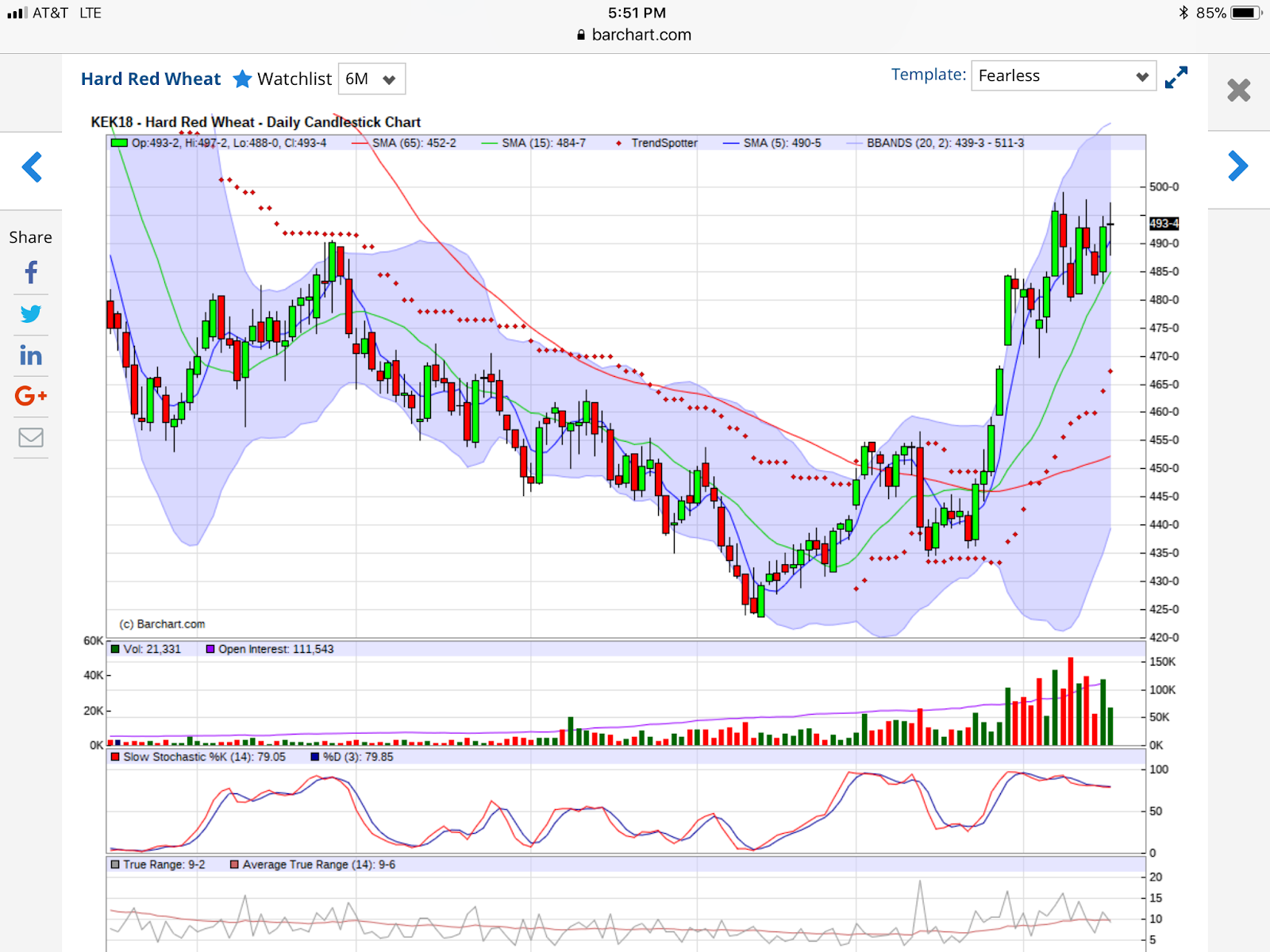
The first thing that stood out to me this a.m. the fact that yesterday when we went over our charts during our weekly MWC Marketing Hour Roundtable discussion that the US dollar was up against its highs from about a year ago.  Technically if it can mustard past those highs the next resistance point was the June/July 2010 highs and that it a little scary.  Corn price back in June 2010 had got down to about 3.25 a bushel on the futures board.  Hopefully today will be the start of some weakness for the US dollar and hopefully that will give the funds a reason to look at owning the grains again. 

But for risk management we have to realize that we more than just the risk of what we grow or don’t grow.  We have the risk of money flow via what’s happening to the US dollar, as well as risk that a strong US dollar makes our grain more expensive.  Plus the latest USDA forecast big negative wasn’t just about what we have going on in the United States, the big negative was the world grain production increases year over year.  So if we want to have some business coming our way a softer US dollar wouldn’t hurt us.

News out this a.m. include our export sales number.    We seen fairly slow old crop sales across the board. 

Wheat came in at only 3.3 million bushels; which leaves us needing 11.7 the rest of the marketing year to meet current USDA projections.  That would be a number we haven’t seen for old crop in 4-5 weeks.  New crop wheat sales were strong at 15.3 million bushels.  That puts new crop wheat for 2013/14 at 151.2 million bushels; versus 94.6 this time a year ago.  Keep in mind that the USDA is calling for that number to decrease this year over last year; but we are at over 150% of what we where a year ago.  Bottom line is USDA forecasted us not to get the new crop wheat business but so far that isn’t the case.  Perhaps the other countries need to grow some of the big crops that the USDA forecasted first?

Old crop corn sales were 8.7 million bushels; slightly above what we need on a per week basis to hit the USDA’s latest forecasted number.  New crop was only 1.5 million bushels.  This is the opposite of the wheat situation with new crop commitments at 144 million bushels; versus last year being at 195.  Friday’s USDA report has a big jump year over year for exports for corn; but we are several months away from new crop corn so this isn’t a major surprise.

Old crop soybean sales were poor at only 600,000 bushels, while we need about 3.6 million each week to hit current USDA forecast.  New crop bean sales were ok at 12.8 million bushels; but just like corn we are behind a year ago despite the fact that the USDA is expecting a year over year increase.  Soybean oil did see net cancelations; while bean meal exports remained very strong.

Overall export inspections this a.m. was a non-event; nothing too bearish or too bullish.  The only exception might be bean meal.  But it was another event that didn’t tell the funds to buy grains and that is what we are lacking.  Headlines or reasons for the spec’s to get bullish or want to go out and buy grains.  Look at the balance sheet projections on Friday; we can argue them all we want but at the end of the day the funds don’t care to own corn on the board with a  14 billion bushel crop that leaves us with a 2 billion bushel carryout.

As we go forward weather will be important; but to get some of the funds or spec money interested we probably need to be trading a carryout closer to 1 -1.5 billion bushels; with production much lighter than the present forecast.  And even then if the world numbers stay strong or the US dollar decides to continue to rally it could be tough to gain much strength.


Weather will continue to be a factor to drive our markets; but I no longer know if the rain is bearish or bullish.  Some areas have moved fast and such as ours will welcome the moisture. Other areas that haven’t got much done are losing yield potential or acres in general.  But overall it doesn’t feel like we will rally off of too much moisture.  Too many ideas that producers get things done in small planting windows.  I guess longer term the slow planting could still be supportive should we end up well below trend such as some studies have suggested or if we lose a material amount of acres to prevent plant.  But we probably need to shave ½ to a billion bushels off the present production estimates to get the funds very interested. 

Everything else is generically quiet; not much interest from end users.  Birdseed business seems to be very good; but actually buying demand is hit and miss.  The milo market is strong and I have guys looking for milo offers.

Wheat basis is hit and miss; we haven’t had enough good weather to see the baseball season bun baking business pick up nor do we have enough exports to keep the mills too honest.  But we also don’t have much for producer interest in selling.  I do think that we could have a huge amount of spring wheat to move in both North and South Dakota before new crop and that might act like a harvest before the harvest so I am a little bearish spring wheat basis.  Winter wheat basis remains strong but still lacks the exports to make another leg up.

Corn basis is solid and firm; but the inverse on the board makes basis feel top heavy about every other day.  Local ethanol plants have no interest owning corn for slots they can’t sell ethanol for; yet as mentioned many times recently ethanol margins are very good and promote expansion of production not reduction.

Please give us a call if there is anything we can do for you.

Thanks

Wednesday, May 15, 2013

Closing Market Comments - Wheat gets smacked hard


The grain markets closed weaker across the board today; CBOT wheat lead the pressure down 17 cents, MPLS wheat was off 8 cents, KC wheat was down 15, old crop corn was down 2, new crop corn was off 6 cents, old crop beans were down 2, and new crop soybeans were off 4 cents.  At 2:45 outside markets have the DOW up about 55 points, crude about unchanged, gold off 34 bucks, and the US dollar continuing its strength up 220 on the cash index at 83.815.

Bad day for markets; but not a huge technical day for most of the markets.  Some of the wheat markets did put in new lows for the month but not much damage to the corn and soybean charts.


This morning we had ethanol production numbers out.  Friendly across the board with ethanol production this week at 252 million gallons; up from 248 last week and thus matching the highest level since last June.  The bigger and more bullish story on the ethanol side is the fact that ethanol stocks are now at the lowest level since December 2010; they are down to 690 million gallons.

What makes the ethanol thing even more interesting is the recent conversations with ethanol plants.  First off you have huge nearby margins that have lead to some in the industry to ask if more ethanol plants will be put back into production.  But when I talk to local ethanol plants some of them mention comments that plants will be taking some possible down time in the coming months.  Some for maintenance which is normal; but most of the talk comes from the huge inverse that the ethanol market has. 

Meaning one of the buyers today mentioned that he couldn’t sell the ethanol for Aug-Sept; the ethanol futures have an inverse on the board.  With the September ethanol futures presently a 26 cent a gallon discount to the nearby futures.  Now I don’t know many producers that will actually sell me corn for less in August then they will for nearby delivery because of the cost to hold the product along with the risk of holding product in their bins with the typical heat we can see during the summer.  Plus things are going to be very tight in that slot; so the offers that I am showing to the ethanol plants are at a carry versus the nearby offers.  But most seem to have little interest; because as mentioned above they can’t sell the ethanol for that slot.  Plus last year many got on the wrong side of the market with the spreads. 

So the question should be at what point do these ethanol plants shut it down like some are making reference to.  If they do shut it down what could happen to ethanol stocks and ethanol price?  Just on the surface it looks like we presently only have a 2-3 week supply of ethanol.  Overall the above makes me bullish corn basis; but with all of the components and the huge inverse on the corn board from July to September it is tough to stay bullish basis.  Maybe it means that the way this thing plays out is for the September board to run up after the July goes off?

Bottom line is recent conversations with ethanol plants along with the ethanol numbers leave me scratching my head and lead me to think that the old crop corn volatility especially in the cash price has yet to see all of the fireworks go off.  I don’t know how it will shake out but it appears we have a catch 22 situation.

The other big news out today was the NOPA crush numbers.  They came in below expectations but still show very strong demand.  They came in at 120.1 million bushels; down nearly 9% from a year ago.  But still year to date up 5% from last year.  If we are to only reach the USDA’s current forecast we can only crush 433 million bushels from now to the end of August.  That would be a 22% decline; the only other year we have seen anything similar is in 1976/77 when we seen a 25 % year over year decline.  433 million bushels would also be the lowest in this time period since 1996/97; bottom line is that the market still needs to curb plenty of demand or in all likely hood the USDA present estimate of 1.635 billion bushels for crush will be exceeded.

The one comment I seen was perhaps the trade simply couldn’t source the soybeans.  Can’t crush what you don’t have.  Now whether it is bullish or bearish who knows?

I did see an article mention the fact that Goldman Sachs was now bearish on the Ag’s.  Now when we see stuff in the news it is usually already old; something that happened previously.  But we do need to find a way to encourage money to flow into the grains.  Everything now days seems to be going into the stock market and who would blame guys going with what has been a winner.  Perhaps it just means a pull back in the stock market would be good for grain prices?

Elsewhere we are still offering free delayed price on most of the grains and we have plenty of room for most of the grains.


Part of the weakness for the wheat market today seemed to come from thoughts that the prospects for the EU wheat improved and I did see a comment that parts of Russia got some moisture overnight.  Remember that Friday’s report showed a big year over year increase for world wheat production up to 701 MMT versus 665 MMT this present year.  Between Argentina, Australia, Canada, EU, Kazakhstan, Russia, Ukraine, and our self the United states production is pegged to be up 13.1 % .  These countries are the major exporters in the world; and you have the US down a little over 8 % on production; but overall the major wheat sellers in the world with us included are pegged up 13 %. 

Bottom line for wheat is everyone knows we have a train wreck in South Dakota and many other parts of the HRW belt; but at the end of the day the balance sheets don’t look to be greatly affected unless we find some additional demand.  Additional demand probably comes our way if we have issues else were in the world.  Today we don’t have much; but the crops around the world are by no means already in the bin either.

Please give us a call if there is anything we can do for you.


Jeremey Frost
Grain Merchandiser
Midwest Cooperatives
800-658-5535
800-658-3670

Tuesday, May 14, 2013

Closing Grain Market Comments 5-14-2013


Markets closed mixed today in choppy trade despite the rather friendly crop progress report that we had yesterday.

Old crop corn was off 3 cents, new crop corn was off a penny a bushel, KC wheat was up ½ cent a bushel, MPLS wheat was down a penny a bushel, CBOT wheat was up a penny a bushel, old crop soybeans closed down 4 ½ cents, new crop soybeans were up a 4 cents, the US dollar is up 310 points at 83.586 on the cash index, the stock market made more new all time highs on the DOW today  up 124 points, crude was off almost a buck a barrel, and gold was off about 10 bucks an ounce.

Rather choppy market action today.  The May contracts went off the board without much for fireworks; but spreads did end up at record levels or at least go off the board at the highest levels in history.  Hopefully that means we have set a target for the July futures to achieve; but it might take more than basis strength and a lack of producer selling.  It might take the funds or “big money” getting interested in the grains if we want to see the July contracts get up to the levels that the May corn and May soybean contracts went off the board at.

The past couple of days we have had plenty of news; with the crop report out last Friday the 10th of May and then yesterday we had an updated crop progress report that showed us with the lowest corn planting pace on record.  I didn’t think the report on Friday was negative; but it wasn’t enough to get the funds buying either.  It showed big world production idea’s and big United States production ideas for the 2013/2014 crops; but everything was very close to the pre-report trade estimates.  The present balance sheets remain historically tight and the late planting progress won’t help new crop aid in the old crop tightness like it did last year.

I also thought the crop progress coming in at only 28% corn planted; slow spring wheat planting, slow soybean planting, and a poor winter wheat crop would have been supportive to our price action; but that wasn’t the case.  We didn’t mustard much of anything today; despite the fact that some deferred forecasts are also wet for much of the corn belt.  Part of the reason is we a planting window going on now.  But the bigger thing is the funds don’t seem to want to buy our markets because off too much rain.  Will that change at some point?  Perhaps?  But when the funds see the USDA print a 2 billion bushel carryout with production of over 14 billion bushels it is going to be hard to get them on the bull bandwagon.  Especially if they look deeper into the balance sheet and see that to come up with a 2 billion bushel carryout; we need to increase demand by nearly 2 billion bushels over this year’s demand.  On a percentage basis that has been done; but never on as a raw number.

As I have mentioned many times recently the most probable logic to increase demand is via lower prices; the USDA average farm price as example.

Bottom line is the outlook that the funds see for present fundamentals needs to change; at the end of the day it doesn’t matter much what you or I think our fundamentals are or could be.  It might eventually; but on a day to day basis it’s what do the funds or “big money” think.  So realize that they might not add the premium that many in the industry feel should be warranted.  And if the USDA’s latest forecast is close to accurate; being pro-active will be the move for this year.  Notice a lot of “if’s” ; but keep in mind that doesn’t mean we shouldn’t be pro-active.

Tomorrow will bring some demand news with the weekly ethanol numbers and the NOPA soybean crush numbers. 

Otherwise we really don’t have much new news out there.  We can talk about the weather and the new crop demand projections but those are becoming old.  The bottom line is weather should drive our markets; but I don’t see it driving us up until things become a total train wreck and even then it might be hard for wet weather to drive grain prices up.  Everyone know it takes rain to make grain; so too much rain isn’t the best candidate for a grain price rally. 

Our best candidate for future price rally might be the old crop tightness and then after that weather issues elsewhere in the world.  But keep in mind the time table of when weather issues to happen probably isn’t ASAP……….our weather rally last year didn’t start until the Middle of June.  The 2010 weather rally via Russia’s issues didn’t start until July. 

The other slim possibility is just a reason for the funds to get interested; keep in mind that the 2008 corn rally happened with a big carryout; it started via the wheat market and overall good things going on in the world economies along with talk of hedging commodities against inflation.  So that might also be something to lend some support at some time; a black swan that says buy grains or commodities for X reason.

The other thing that can happen is just the technical trade; at some point things become over done and then with the funds involved we seem to have an ability to overdue things in the opposite direction.  A technically driven or emotion driven market that decides to accelerate to the upside at some point is also a possibility; it just probably doesn’t happen until we least expect it.

Elsewhere things rather quiet.  Corn basis feels firm; but I can’t sell much August corn to the ethanol plants as they just don’t like the huge inverse that they have on the ethanol side of things; not to mention the corn inverse from July to September futures.  Winter wheat basis is steady to firmer; while spring wheat basis feels a little weaker up front; but a little more interest in the deferred slots.

Birdseed orders have been strong; but buyers are not paying up either.

I do have buyers looking for milo if anyone has offers on that; things there are very tight.

One thing we need to watch is the US dollar which is at the highest level this year; another negative check mark for grain price outlook.

Please give us a call if there is anything we can do for you.

Thanks

Market Comments - Slow corn planting Continues


Markets are called choppy/mixed this a.m. behind a mixed overnight session.

July corn was off 3 cents, December corn was unchanged, KC wheat was off 2 cents, MPLS wheat was up 2 cents, CBOT wheat was up 2, old crop beans off a penny, and new crop beans up 2 cents.  Outside markets have the US Dollar about unchanged, crude off 30 cents a barrel, gold off 11 bucks, and equity futures pointing towards an unchanged start on the DOW.

The May contracts expire at noon today; hopefully those levels can act as some price targets for the July contracts.  The May corn is about 70 cents higher then July, May soybeans are a 1.10 higher than July, and MPLS May wheat is 43 cents higher than the July MPLS Wheat contract.  Yesterday May corn and May soybeans had incredible strength and were the main headline for the rest of the strength in the grain complex.  This a.m. both of those markets are up 4-7 cents; but very thinly traded.

Yesterday afternoon we had a crop progress update that showed corn only 28% planted.  Yet last night we didn’t mustard much strength in the corn market.  Why?  The funds just don’t seem to care and the end users are not ready to panic and push this thing higher; at least not yet.  We want to be patient in waiting for better prices; yet we also should try to be pro-active.  Not easy to do both at the same time.

Last year when did the drought start?  But when did the market finally start to trade it?  The drought was going on the whole time that planting was well ahead of schedule but the market didn’t trade it until June 18th; that Sunday night the market opened up strong and by the close on Monday we had a positive 28 cents on December corn. 

When did the USDA acknowledge the dry situation?  Not until the July crop report.  Last June they didn’t decrease the yield despite the early dryness that was seen.  Their May number was actual an increase from their outlook numbers that came out in February. 

So when will the USDA or the funds acknowledge or trade the present slow planting situation?  Well first off the USDA did drop yield from the outlook form; so in a sense they have acknowledged it.  But to what extent should be the question and maybe that won’t be known until we actually have a better idea of when the crop get’s planted.

Perhaps the market is trading this current situation and not the fear of how bad it could get?  Bottom line is we have plenty of question marks and still don’t know the answers, and we don’t exactly have a history telling us we will trade worst case right away.  The funds might be late to the game or then the outcome of the game might just not be known.  I think that is the case; we really don’t know how production will shake out and we probably don’t have a reason to run things up today.  IF things change and we end up with a big production number the market will need to do its job of finding demand.  If we stay on the present path the market might just be slow to re-acting.  Bottom line with all of this is to realize what is bearish out there and what is bullish out there.  Thus in your grain marketing plan realize that the market doesn’t have to trade what you or I think it bullish it and the funds will have a mind of their own; so be pro-active or find a way to get yourself comfortable.

As for other news out there; we really don’t have much other then weather and crop progress/conditions.  Crops are extremely behind average and the wheat crop remains very poor.

I did see some updates from CNGOIC on the Chinese crops; they pegged corn at 214 MMT versus the USDA at 212 on Friday.  They pegged the soybean crop at 4% less than a year ago at 12.3 MMT.  Wheat at 121.9 MMT versus 121 that the USDA had on Friday.  These are all for the 2013/14 crop size.

Forecasts still see dry weather the next couple of days but a system later this week.  I know I am praying for us to get some of the moisture and I seen a couple forecasts that have us with up to a 60% chance on Saturday.

South Korea did buy some optional origin feed wheat as well as optional origin corn.

I did see a comment that as much as 30% of the corn could get planted this week; so some of the estimates for next week are 50-60% planted.  What number would be bullish enough for our markets to have a leg up?  What number would be bearish enough for the funds to try and sell this thing down?

Please give us a call if there is anything we can do for you

Monday, May 13, 2013

Closing Market Comments- USDA Crop Progress - Supply and Demand Report - CFTC Recap


Markets closed firmer across the board today lead by the expiring May contracts, which go off the board tomorrow as spreads traded very firm leading us higher.

May corn was up 30 cents, July corn was up 19 cents, December corn was up 10 cents, KC wheat was up 8, MPLS wheat was up 4, CBOT wheat was up 5, May soybeans closed up 33 cents, July beans up 20 cents, November soybeans up 4 cents, equities had the DOW off 27 points, the US dollar near unchanged, crude off about a buck, and gold was off about 8 bucks an ounce.

Nice day for the grains as old crop corn and old crop soybeans gained all that they lost on Friday and then some.  Wheat however only gained a portion of what it lost on Friday; as did the new crop row crops.

The strength looks like someone wants some old crop; basis is strong and the May futures go off the board tomorrow at noon. 

This a.m. we had export shipments out and they were strong for wheat, poor for soybeans, and ok for corn.  Wheat was above what we need on a per week basis, corn was double last week but still below what need on per week basis, and beans were half of what they were last week and below what we need on a per week basis.

New crop corn and beans followed; as did wheat, but the charts didn’t do anything impressive today.  The 6-10 day forecasts and 8-14 day forecasts were wet this a.m. and last night; but the ones I seen this afternoon are a little dryer.  Not sure if that will be enough to pressure or markets or not. 

This afternoon we had an updated crop progress report.  Corn planting came in at 28% planted; below estimates and well below average.  But I don’t know if it is bullish enough for prices to run up.  Now if the forecasts turn wetter or the system coming later this week gives us more moisture then expected we could see things run up.  The thing to keep in mind is these forecasts are not new news; the fact that we are well behind average isn’t new news; and yet prices are about the same as they were a month and a half ago.  So despite all of the issues with a late slow planted crop we haven’t managed to add much premium.  Is that weather premium still to come?  Or could things be a lot uglier if we had everything going smoothly?

I know plenty of producers are bulled up because of the potential acres getting lost or switched as well as the potential yield reduction from the late planted crop.  But has the market really acted like it cares?  Hopefully it just means the market is slow re-acting like they were to last year’s drought? But for risk management purposes and marketing purposes we need to realize that if the market can’t show strength despite bullish news perhaps the news isn’t that important.  Or at the very least realize that if we were waiting for the weather rally scare that started because of our slow planting; that news is here and now.  It can get worse and we could fall further behind and potentially lose acres and more yield potential; but it is becoming old news.  The market isn’t focusing on that and if it doesn’t soon perhaps it won’t.  Perhaps this is all the higher this news alone can take us? 

Overall I think I would like to give it a little more time to develop; but the market really needs to start reacting sooner than later.  Or the “big money” will start looking for another story. 

The question we might have to start asking our self is what will the market do if we get the balance of the crop planted over the next 2-4 weeks.  With today’s planting pace of 28% what do we need to have happen to see a bullish reaction in the next week?  How low does that number need to be by memorial day to be considered bullish?  I don’t really know the answers to those questions; but I am a little disappointed that we haven’t rallied more then we have.  

Look at it this way on April 14th planting was a 2%.  That report came out on April 15th at 3:00; on the 16th the next trading day after that report we closed December corn at 5.40.  Planting as of yesterday was 28% completed for corn versus 65% on average.  The price today closed at 5.39 on December corn.  26% planted in a month and we lose a penny?  What will it take over the next week to have a strong up move? 

Maybe the grain markets have just lost the interest from the funds?  What will it take to get them back interested?

Spring wheat planting did make a good job up to 43% planted; so still behind but catching up a little.  South Dakota is at 76% planted; up 30% on the week. 

Winter wheat conditions came in unchanged on the week; still a horrible looking crop.  But still not enough reason for the funds to get interested and if the USDA world numbers are correct it might be some time before the funds decide to get on the wheat bandwagon.  One thing that is and should be a little positive wheat is the fact that it seems like the USDA typically starts off aggressive on production.  We know they have done that for the US corn crop the past couple of years; but they also tend to do that in other places; such as our competitors.  The problem is they also tend to overstate demand.

Weather does seem to have some small issues in other areas growing wheat and that is one thing we will have to keep our eye on.  The world wheat production was pegged at 701 MMT for this coming year; which would be well above the 655 MMT raised this year.  Yet the carryout number is fairly flat year over year at 186 for next year versus this present years 182 MMT. 

Below are a couple links from CHS Hedging.  The first is crop progress update.


This next is CFTC Commitment of Traders data.


The last one is the video recap of the USDA report from Friday.


As we go forward we should remain in a weather market; but once we get this crop planted rain won’t be what will run us up.  If we do manage to get things in the ground the job of the market will be trying to find demand and the easiest way to find demand is via lower prices.  The USDA forecast on Friday was for lower prices for next year; the average farm price for new crop corn 4.30 to 5.10; if that is an average price that means that in their forecast they are saying we will spend some time below the 4.30; which in our area means under 4.00 cash prices.  The average price for soybeans 9.50 to 11.50; which means a forecast below 9.50 at some time.  How low below the low end of the average does the USDA think we will get?  Don’t know.  Does it matter what they think our low price will be.  No; it doesn’t.  But what we need to take from it is the fact that how do they think our demand will improve year over year?  Based on what they have for average farm price; I think they expect that demand increases via lower prices.  If we told the USDA our prices will be at present levels; where does that put your demand projections at?  I would guess the answer would be sharply lower demand?

Bottom line is make sure you get yourself comfortable in your marketing plan.  If you are not comfortable now perhaps have a pro-active plan that gets you comfortable.  And if you are betting on the horse that rain and moisture will keep things from getting planted realize that horse hasn’t been very attractive to the funds so far.

Other news out there will include the NOPA crush numbers out Wednesday this week.  Have we curbed any soybean demand?


The birdseed market has been impressive with orders; but actually buying interest remains very hit and miss.

Spring wheat spot floor basis also remains very defensive.


Please give us a call if there is anything we can do for you.


Opening Comments 5-13-2013


Markets are called mixed/choppy this a.m. behind a mixed overnight session.

When the overnight sessions ended July corn was up 4 cents, December corn was up 4 cents, KC July wheat was up a penny, MPLS wheat was up 2, CBOT wheat was up 4, July beans up a penny, and November soybeans down a penny.  Outside markets have a US dollar about unchanged at 83.21 on the cash index, equity futures are pointing towards a lower start of down about 15-20 on the DOW, crude is down 90 cents, and gold is off 4.50 an ounce.

Last night markets opened lower; but did manage to bounce as the session went on mainly behind the concern of getting the corn crop planted.  This afternoon we will have crop progress and the average estimate is all over the board; I have seen some as high as 40-50% but most of them are closer to 30 %; just a huge range.  29% in 1984 is the slowest pace on record.

Bottom line is if we are something close to 30% and don’t get going in the next few days the deferred forecasts are wet; with much of the corn belt including parts of our area called for above normal moisture.  Same with the 8-14 day; above normal for most of the corn belt and once again including our area.  We will take the moisture with arms wide open; but many parts of the corn belt are not looking for it.  From what I hear this might lead to some planting in the mud and that might open up more concerns later down the road.

The other thing that our slow crop opens the door to; include early freeze, pollination possibilities when it is hot and dry, and no early relief to the tight old crop situation.

When I look at the balance sheets that the USDA provided I question how important or critical the current slow corn planting place is.  But only because I don’t know what it could mean to production.  Could production ideas still range from 13.0-15.0 billion despite slow planting?  How many acres will we need to lose for the market to be trading production closer to 13 billion then the present 14 billion that was estimated on Friday?  And if we dig deeper I question how fast demand bounces back; if we grow a 13-14 billion bushel crop can we gain back most of the demand we lost the past couple of years?  Can we gain back more than we lost?  If we are going to gain demand back will it have to come from a lower price?  If so how low of a price?

Other news out there this a.m. include export inspections that will be out at 10.  As mentioned above this afternoon we will have crop progress/condition report.  Later this week we will have a NOPA soybean crush number out and that will be a good gauge on soybean demand.  Have we curbed any? Or do we still have some potential fireworks in the future?

South Korea does have a tender out for more corn.  Last week they bought 400k tones of corn/feed wheat.

We did see a little cold weather in some of the upper eastern corn belt; but CBOT wheat futures are not responding and it doesn’t look like the damage was significant if any.

Bottom line is we are now in a weather market and we could be and should be choppy and volatile.  Keep in mind that one of these days too much rain will be a bad thing to our prices.

In regards to wheat I think it is a potential big sleeper as I thought the USDA overstated HRW production.  But we need to keep in mind that the issue with wheat isn’t our crop; the issue or thing holding wheat back is the crops around the world.  Production estimates are for bigger crops in Australia, Ukraine, Russia……….etc.  Basically the whole world can raise wheat and the latest USDA forecast is that the whole world will raise wheat.  So I think wheat’s game is now what happens in other places.  Perhaps when the combines hit the United States we can get a spike up; but basically the USDA said it doesn’t matter what we raise because everyone else will be picking up the pieces.  Now the thing to keep in mind for wheat grown in the world is similar to what the USDA did for our corn crop the last couple of years.  Early projections seem to be the potential; but are they realistic?  Meaning we could easily see some of those production slip ups.  Keep in mind that the 2010 rally started because of the Russian wheat crop and that didn’t start moving our market until July and into August. 

Please give us a call if there is anything we can do for you.

Friday, May 10, 2013

USDA Report Recap - Thoughts on May 10th 2013 USDA Supply and Demand Report


USDA report came in fairly close to pre-report trade estimates.

Below is a rundown of the actual numbers.


My thoughts are overall neutral report; things that stick out to me as we go forward however include the wheat production.  They have Kansas fairly well below the crop tour but overall they have wheat production in line with estimates.  From what I am hearing in the rest of the parts of South Dakota they have our state overstated.  Also I would comment that small crops get smaller and I look for that to happen to wheat as we go forward.  Now how much of an offset spring wheat and SRW are remain question markets.

They have our corn yield at 158 for new crop; that to me isn’t out of line.  Some will argue that it isn’t enough of an adjustment versus the late planting and other bulls will mention that we have too many marginal acres.  I won’t argue with either point; but I would say that 158 is an ok starting spot; with good weather it can get bigger and plenty of reasons for it to get smaller too.  That puts their production number a hair over 14 billion bushels and this is where my concern comes in at.  A 2 billion bushel carryout after……….after we increase demand nearly 2 billion bushels from this year???? 


What happens if we can’t actually increase demand by the nearly 2 billion bushels?  Ethanol usage up to 4.85 billion bushels next year might also be questioned with the blend wall?  Feed usage nearly a billion bushels more?  I didn’t realize herds could be increased that fast?

New crop prices averages for corn 4.30 to 5.10……….does that include the higher priced stuff that was pre-contracted back in August/September?

Bottom line is we will need to have very strong demand if the production estimate is any place near the 14 billion as pegged today.   Maybe that is a big if that our production can be that high; but from where I stand it isn’t much more than a coin flip if it is higher or lower than that.  Now if in 2-3 weeks we still don’t have the corn planted  I could see that production slipping; so I think weather forecasts will be fairly important.   Sunday nights forecast might be more important than what today’s report showed.

Same type of comments could and should be made about the bean balance sheet for new crop; increased demand via increased exports and increased crush numbers but also with much lower average farm prices of 9.50-11.50.  Under 10 beans won’t taste very well to many.

What also has to be considered strange or raise yellow flags is our pace in exports versus projections.  Presently for new crop sales already on the books we are ahead of last year for wheat while corn and beans are behind last year’s pace.  But year over year the USDA is projecting corn exports and bean exports up next year versus this year; while they projecting wheat exports down from this year to next.  Granted it is early as we are not even in those marketing years and in the case of soybeans and corn we are months away.  But at the end of the day the USDA said expect to see corn and bean demand increase for exports with wheat demand expected to get softer.

I have heard some talk of stress on some areas growing wheat such as Ukraine, Russia, and Australia.  But today’s report has big increases year over year for their wheat production.  Perhaps it is something that can give us a bounce in the future?

The other thing the USDA didn’t do was acknowledge the old crop tightness situation in soybeans and corn.  I think they still have some firework potential as we really haven’t seen much for a slowdown in soybean demand and corn demand for ethanol now has been up a couple months in a row and margins continue to improve.

As for price action around 12:30 grain markets are still in the red with corn down 13-14 cents, KC wheat off 17, MPLS wheat off 14, CBOT wheat off 19, and Soybeans off 6-13.  The majority of that weakness was before the USDA updated Supply and Demand Report came out; it seemed to be from a risk off day for the commodities with crude down a couple bucks and gold under pressure.  Today’s report wasn’t bullish enough to tell the “big money” to go out and buy the grains and honestly I think today’s report sets the stages for the normal seasonal price patterns to happen.  For corn that means we keep some weather premium in; but if we don’t have hiccups we need to go lower to promote the increased demand that is forecasted. 

Here is a link to a CHS Hedging recap.


Below is recap; coming from the Van Trump Report.


US Ending Stocks 2012/13

May #
April USDA #
Avg Guess
Range of Guesses
Corn
0.759
0.757
0.749
0.684 - 0.800
Soybeans
0.125
0.125
0.123
0.107 - 0.130
Wheat
0.731
0.731
0.733
0.720 - 0.747

US Ending Stocks 2013/14


May #
Feb Ag Outlook #
Avg Guess
Range of Guesses
Corn
2.004
2.177
1.993
1.387 - 2.427
Soybeans
0.265
0.250
0.236
0.147 - 0.325
Wheat
0.670
0.639
0.658
0.486 - 0.800

Global Ending Stocks 2012/13


May #
April USDA #
Avg Guess
Range of Guesses
Corn
125.43
125.290
125.646
123.500 - 132.100
Soybeans
62.46
62.630
62.300
61.111 - 63.000
Wheat
180.17
182.260
181.528
178.300 - 183.200

Global Ending Stocks 2013/14

May #

Avg Guess
Range of Guesses
Corn
154.63

151.695
130.000 - 168.300
Soybeans
74.96

68.991
64.000 - 83.000
Wheat
186.38

184.368
175.000 - 195.800

US Wheat Production


May #
2012 totals
Avg Guess
Range of Guesses
All Wheat
2.057
2.269
2.062
1.832 - 2.190
All Winter
1.486
1.646
1.497
1.359 - 1.604
Hard Red Winter
0.768
1.004
0.776
0.676 - 0.875
Soft Red Winter
0.501
0.420
0.504
0.473 - 0.636
White Winter
0.217
0.222
0.217
0.204 - 0.226

South American Production


May #
April USDA #
Avg Guess
Range of Guesses
Brazil Corn
76.0
74.000
74.708
73.000 - 77.500
Brazil Soy
83.5
83.500
82.807
81.500 - 83.500
Argentine Corn
26.5
26.500
25.583
24.000 - 26.500
Argentine Soy
51.0
51.500
50.714
48.500 - 51.500


Jeremey Frost
Grain Merchandiser
Midwest Cooperatives

ESPN.com Breaking Sports News